
Portfolio
Portfolio
The new vintage: how natural wine became a brand go-to
Natural wine began as a winemaking argument. Minimal intervention, living soils, wild fermentation — a rejection of the additives and industrial standardization that had come to define most of what filled supermarket shelves. The people making it were serious about the glass. What's happened since is that those principles have developed a second life outside the cellar. The same qualities that define natural wine as a product — scarcity, provenance, a visible connection to the people and place behind it — translate cleanly into the language of contemporary brand culture. Fashion labels, streetwear brands, and lifestyle companies haven't borrowed natural wine's aesthetic so much as recognized that it was already doing something they wanted to do: signal values through craft.
The following is adapted from a report commissioned by Canvas8, published February 2025, featuring interviews with George Hammond, co-founder of online natural wine store SIPS, and Andreas Tzortzis, founder of branding consultancy Hella Brand.

Natural wine's ascent tracks closely with a broader generational shift in how younger consumers relate to what they buy. 73% of Gen Y and 64% of Gen Z say they want to invest more in quality purchases that last, while 63% of Gen Z and 62% of Gen Y say they're willing to pay more for ethically made products. (Tink, 2024) Natural wine sits at that intersection — expensive, principled, and visually distinctive. Europe's organic wine market hit a 77.4% share of the global sector in 2023 and is projected to reach $16.76 billion by 2030, growing at 10.5% annually. (Grand View Research, 2023) But the growth isn't just commercial. Natural wine has generated its own ecosystem of zines, festivals, podcasts, and social media communities that treat it less as a beverage category and more as a set of aesthetics and affiliations.
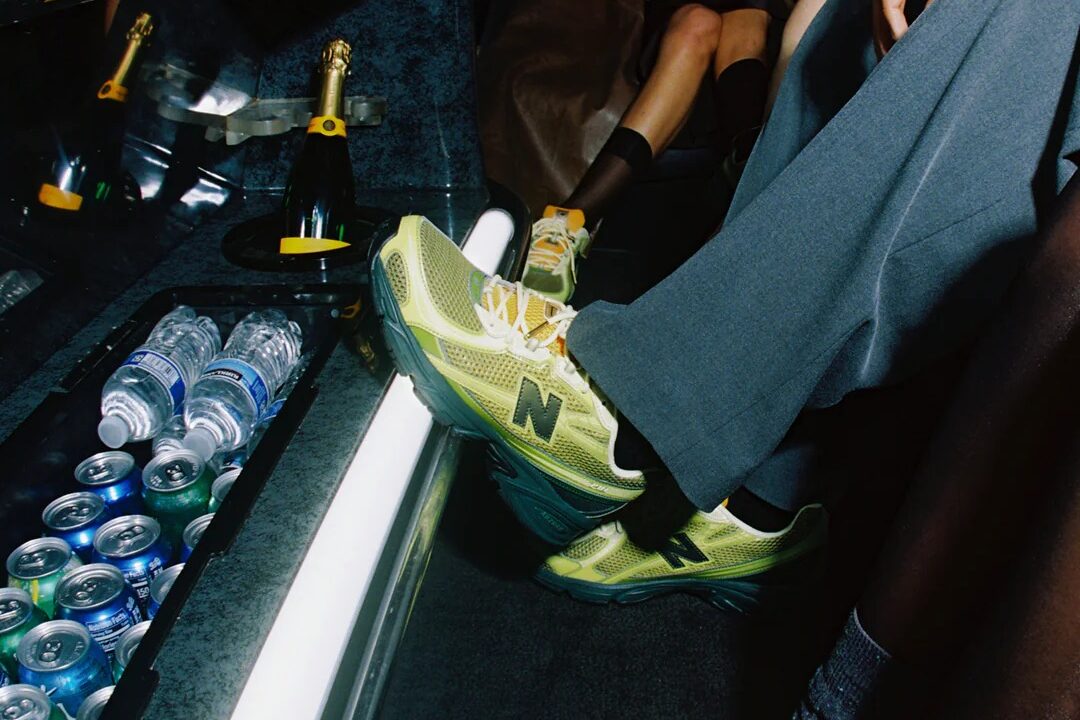
The fashion world noticed. In the last few years, brands at the sharper end of style — Highsnobiety, Our Legacy, Apartamento — have launched natural wine collaborations that function less as marketing than as positioning. Andreas Tzortzis, founder of branding consultancy Hella Brand, describes natural wine's appeal as narrative-driven: younger producers, small batches, a direct connection to land and process. George Hammond, co-founder of online natural wine store SIPS, draws a direct line between natural wine and streetwear drop culture. "Just like in streetwear, scarcity creates desire," he says, "and each bottle from each unique batch tells a story." New Balance and Concepts built a sneaker around wine-inspired colourways and cork detailing. (CNCPTS, January 2025) Our Legacy partnered with an architect-turned-vineyard owner on a limited collection that included shirts deliberately stained during the winemaking process.

What's worth watching is whether natural wine can hold that cultural position as it scales. The same dynamics that made craft beer countercultural eventually made it a supermarket staple. Natural wine is already generating its own version of that conversation — one piece asked whether it had lost its cool factor, noting that Instagram aesthetics had begun to replace critical scores as the primary currency of evaluation. (Bon Appétit, October 2022) The tension between authenticity and adoption is exactly where natural wine sits right now, and it's the same tension that makes it useful to brands: close enough to the mainstream to be accessible, still carrying enough subcultural weight to feel like a genuine signal.
Canvas8 reports are available to platform subscribers. For a full copy of this piece, contact hello@alicesweitzer.com.